

Traveling for facial cosmetic surgery can be a very reasonable decision. The surgeon whose philosophy, training, and work feel right for you may not practice in your city, or even in your state. I care for many patients who travel to New York for surgery, and I certainly understand why someone may be willing to travel a considerable distance for a procedure involving the face.
Still, booking a flight is not the same as making a surgical plan. The operation may happen on one day, but the process begins well before you arrive and continues long after you leave the neighborhood. The consultation, medical preparation, anesthesia plan, caregiver arrangements, local recovery, and follow-up all need to work together. When it comes to facial surgery and recovery, my advice is to leave as little to chance as possible.
Traveling for surgery is not a single event. It is a process that begins with preparation and continues through recovery, the return home, and long-term follow-up.
Begin by researching the surgeon carefully. Review education, training, board certification, experience with the procedure you are considering, surgical facility credentials, and the quality and consistency of the surgeon’s work. Before and after photographs can be helpful, but look for patients with concerns and anatomy that are reasonably similar to yours rather than focusing on one dramatic result.
It also helps to know what you are hoping to discuss. You do not need to diagnose yourself or choose a specific operation – that is the unique role of the consultation. However, be prepared to describe what bothers you and what changes you hope to see, while remaining open to the surgeon’s perspective and recommendations. I recommend coming with specific concerns rather than simply asking, “What do you think I need?”
A surgeon’s social media presence may introduce you to a practice, but popularity is not a substitute for proper research or a consultation. Pay attention to how the surgeon communicates, how your time is treated, how measured the recommendations feel, how the practice approaches safety and comfort, and how they support you if your recovery does not follow the expected course.
Some surgeons offer virtual consultations for patients who live far away. If that option is available, ask exactly what the appointment can and cannot accomplish. A virtual conversation may be useful for discussing your general goals, medical history, candidacy, and the surgeon’s approach. Approach, however, is not the same as a finalized surgical plan.

A virtual consultation can be a useful first step when distance makes an in person visit difficult. However, it is important to understand its limitations and that the surgical plan may be adjusted after an in-person visit.
There are meaningful limits to what can be assessed through a screen. Lighting, camera angle, lens distortion, facial expression, and internet quality can all affect what is visible. A surgeon cannot palpate the tissues, assess subtle asymmetries in three dimensions, or examine structural features with the same accuracy possible in person.
A recommendation made virtually may therefore change after an in-person examination takes place. Understand this before paying consultation fees or deposits, arranging time away from work, or booking nonrefundable travel. It is important to recognize that a virtual consultation may be a preliminary step, and that the surgical plan may change once your anatomy can be examined directly in person..
In my practice, surgical consultations are conducted in person. I want time to examine the face, feel the tissues and structures relevant to the planned surgery, obtain standardized photographs, and discuss what I believe will and will not serve that patient’s anatomy. For rhinoplasty consultations, I also examine inside the nose. Computer simulation imaging is based on properly oriented, standardized photographs, and the accuracy of this process cannot be replicated through a brief video meeting.
An in person visit also gives you an opportunity to experience the practice, meet the team, ask questions, and decide whether you feel comfortable placing your care in their hands. It allows me to determine whether the patient is a good fit for my skill set as well. Patients often underestimate the value of a good mutual fit.
If an in-person consultation means traveling home and returning again for the surgery, I still believe the additional trip can be worthwhile. Facial surgery creates changes you will live with every day, and recovery requires trust, communication, compliance, and detailed planning. Meeting your surgeon properly before making that commitment is part of approaching the process responsibly.
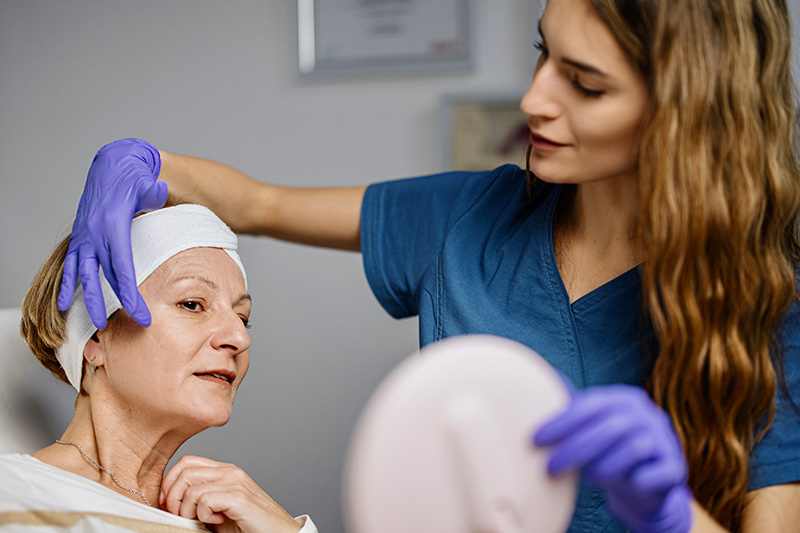
An in person consultation allows your surgeon to closely examine your anatomy, assess your concerns, and take standardized photographs from multiple angles. Just as importantly, it gives both patient and surgeon an opportunity to determine whether they are the right fit for one another, from communication style and aesthetic philosophy to experience and surgical approach.
Once a surgical plan is taking shape, understand what type of anesthesia will be used and what medical preparation is required. Many facial cosmetic operations involve sedation or general anesthesia. Depending on your health history and procedure, your surgeon and anesthesia team may require medical clearance, laboratory testing, an EKG, or evaluation by one or more specialists.
If you have not seen your primary care physician in some time, it’s not in the best interest of planning surgery to wait until the last “minute” to reestablish care. I recommend that patients be evaluated by their primary care physician approximately six to nine months before planned surgery (or longer for patients with more complex medical histories) and then complete the official preoperative clearance within the required window, often within thirty days of surgery. This gives time to identify and address issues such as abnormal testing or medication adjustments.
A delay can be disappointing after travel and time away from work have already been arranged, but there can be no compromise on safety simply because a patient has already made plans. The more specialists involved in your medical history, the more time I recommend allowing for coordination between your primary care physician and specialists.
International patients should also ask early whether medical clearance and testing completed in their home country will be accepted. Requirements vary, and additional testing or a local physician appointment may sometimes be necessary after arriving in the United States. These last minute appointments should supplement, not replace, established medical care at home, to avoid surprises and last-minute surgery cancellations.
Surgery requires organization well before your procedure date. Give yourself enough time for medical clearances, preoperative appointments, recovery, and postoperative follow up. Whether you prefer a digital calendar or pen and paper, planning ahead helps everything stay on track.
Your preoperative appointment with your surgeon should be completed early enough for questions, prescriptions, and outstanding requirements to be addressed. This is when you review consent forms, discuss risks and limitations, confirm medications, receive prescriptions, and go through aftercare instructions. I recommend bringing your caregiver to this appointment whenever possible so they understand the medication schedule, postoperative care, and when to contact the practice.
Before surgery, know exactly how you will leave the surgical facility and where you will recover the first night after surgery, and beyond. After sedation or general anesthesia, you will need a safe transfer and a responsible adult who will not leave you alone. Depending on the procedure and the practice’s requirements, this may be a family member, friend, or private nurse experienced in postoperative care.
For out of town patients, a nearby hotel is often the most practical option. Staying close to your surgical facility and surgeon avoids prolonged travel immediately after surgery. Choose accommodations where both you and your caregiver can rest comfortably, ideally with an extra bed or sofa for your caregiver. Before surgery, make sure your caregiver has your medications, written instructions, emergency contact information, transportation plan, and hotel check-in and check-out details.

A comfortable, convenient place to recover is an important part of traveling for surgery. Staying in close driving distance to the operating room and surgeon’s practice can make early postoperative appointments and unexpected visits much easier.
Ask your surgeon how long you should remain locally before traveling home. The answer depends on the procedure, anesthesia, distance of travel, and how your early recovery progresses. Some procedures may require a shorter in-person follow up period, while more extensive facial surgery may require approximately two to three weeks of in person postoperative care.
Early visits may include incision checks, dressing or drain management, suture or staple removal, and assessment of concerns that are easier to evaluate in person. Your surgeon may also recommend delaying your return home if healing is not progressing as expected. When possible, build some flexibility into your travel plans rather than creating a tight schedule that requires you to leave on a specific day regardless of how you are healing.

Your recovery does not end when you leave the operating room. Early follow up allows your surgeon to monitor your healing and address concerns before you travel home. Before surgery, understand what to expect at each stage of recovery, including dressings, medications, activity restrictions, and the level of support your caregiver will need to provide.
Ask what postoperative follow up looks like even after you return home. Find out whether virtual appointments are available, how prospective clinical questions are handled, and how long postoperative care is included in the surgical fee. You should also understand which visits, treatments, or medications may involve additional costs.
Some practices include postoperative services that require you to return in person, such as scar treatments, injections, and photographs. Understand the timing of these services and whether you will realistically be able to return.
Finally, ask what happens if a concern develops after you have gone home. A photograph or video call may help with some concerns, while others require a hands-on examination to obtain a clear diagnosis and provide care. Your surgeon may need to direct you to a local physician or specialist if you cannot return promptly. Understanding this plan before surgery is part of your responsibility as a patient traveling for elective surgery.

The decision to have facial surgery is deeply personal, and recovery takes time. Plan ahead so you can give yourself the attention, patience, and support you need throughout the process. Give yourself the time and space to heal well, so you can look as good as you feel.
Traveling for surgery requires more planning than simply choosing the surgeon and getting to their operating room. Every part of the process should be considered in advance. When you are traveling for facial surgery, having a clear plan for your medical care, recovery, and follow-up allows you to focus on what matters most: healing well and giving yourself the time and support you need.
Choosing to have surgery away from home is a significant commitment. With thoughtful preparation and realistic expectations, the distance itself does not have to make the experience more complicated. The goal is to arrive prepared, know what to expect, and have a plan in place for every stage of your care.
As always – thanks for reading.
xo, Dr. Renata
Medical disclaimer: This blog is provided for general educational and informational purposes only and does not constitute medical advice, diagnosis, treatment, or a guarantee of results. The information presented may not apply to your individual circumstances, and outcomes and recovery vary based on anatomy, medical history, healing response, procedure, and other factors. It should not be used as a substitute for an in-person evaluation or individualized medical advice from a qualified, board certified healthcare provider. Always consult your physician regarding your own medical care.
At RENATA Facial Cosmetic Surgery, we prioritize privacy. While many Before & After photos are featured on our website and social media channels, we understand not everyone wishes to share them publicly. To respect our patients’ unique preferences, we invite you to explore a more comprehensive Before & After gallery during your consultation in our office.
Life can be demanding, and we understand. For patients who may be traveling, preparing for a last-minute occasion, or simply looking for a more exclusive experience without any inconvenience or delays, we are pleased to offer preferred patient scheduling. Patients may undergo a personal consultation as well as tailored cosmetic treatments during evening hours or weekends. Appointments are required and premium rates apply. Please call our office to inquire about preferred patient scheduling and allow us to create an exceptional experience just for you.
Contact UsAt RENATA Facial Cosmetic Surgery, patients receive excellent customer service, communication, personal attention, and scheduling flexibility. Located in the historical and breathtaking waterfront neighborhood of DUMBO, Brooklyn in New York City, our office serves local neighborhoods including Brooklyn Heights, Park Slope, Williamsburg, and Cobble Hill, as well as Manhattan and New York City at large.
Our office location is:
58 Prospect Street, Brooklyn, NY 11201
Monday - Friday: 8:30AM to 4:30PM
Saturday (by appointment only): 9:30AM to 2:30PM