
One of the most common misconceptions I hear is that recovery is nearly finished once the cast comes off.
To be honest, it is not even close!
Rhinoplasty recovery does not happen all at once. It unfolds in phases, and more importantly, those phases do not move at the same pace. Rhinoplasty is a structural operation on bone and cartilage, performed beneath the delicate layer of skin. These layers must gradually heal and redrape together to reveal the final result. That settling takes time.
Let’s walk through it together.
Congestion, Swelling, & Puffiness
Recovery Pearls
The first week after rhinoplasty is centered around protection and rest. Most patients do not experience severe pain, but rather pressure, congestion, mouth breathing, and mild headaches. These symptoms are often similar to those of a cold or mild flu.
If the nasal bones are repositioned, bruising around the eyes often appears within the first one to two days. Swelling of the eyes, cheeks, and upper lip is expected, and the upper lip may feel stiff with speaking or brushing teeth. During this time, nasal dressings inside the nose limit airflow, so patients rely on mouth breathing, which can be one of the more tiring parts of early recovery.
The nose will appear significantly larger than normal during this time. Swelling actually worsens on days 2 to 3 after surgery, before it starts to get better. The nasal tip may look overly rotated, and asymmetry is common. All of this reflects early swelling and is part of the normal healing process.
My Perspective
This is the phase where patients can feel the most unsettled, not because something is wrong, but because everything feels unfamiliar. The cast, the limited breathing, and the generalized facial swelling can all feel overwhelming.
It is also the easiest time to become fixated on small details. I try to prepare patients for this well ahead of time, because week one is not the time to evaluate your result. It is the time to step back, trust the process, and allow your body to undergo the very necessary recovery. I remind patients that everything in this phase is temporary, even if it doesn’t feel that way in the moment. I remain available for my patients to speak with directly, often reassuring emotions and providing helpful reminders along the way. We get through this together.
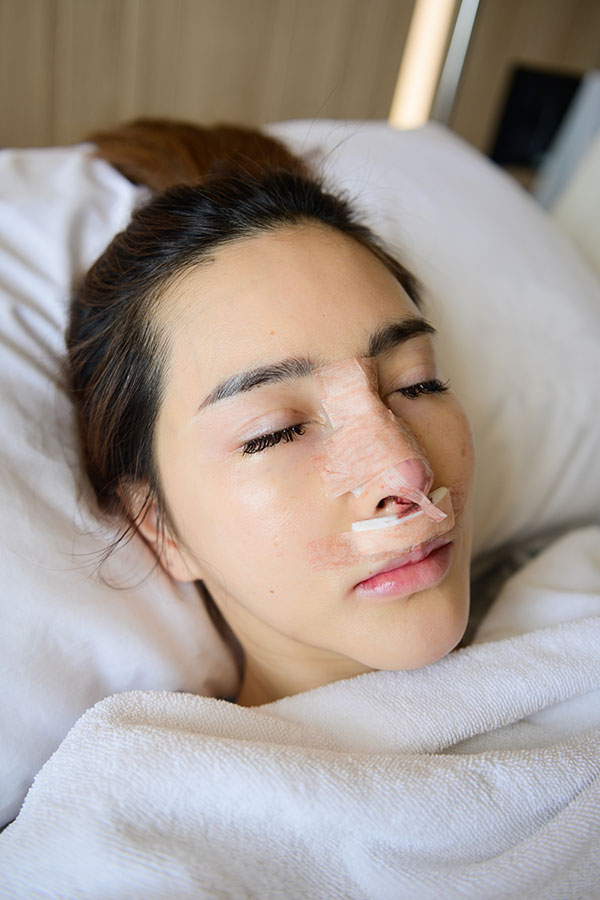
The first week after surgery is a slower phase of focused recovery. The body is working through swelling, bruising, and the presence of bandages. Discomfort is expected, and rest becomes the priority.
Emotional, Exciting, & Still Early
Recovery Pearls
Cast removal typically takes place around day six or seven. At this stage, the nose is still approximately 80–90% swollen, with only a small portion of swelling resolved. What you are seeing is the new nasal structure through a significant layer of puffiness and swelling.
The bridge often appears broader than expected, while the nasal tip can look rounder, larger, and slightly elevated. The tip also feels firm due to swelling. Fullness in the cheeks and along the nasal sidewalls can create a sense of facial imbalance. Swelling in the glabella may give the impression that the nose starts higher, making it appear longer from the side. Internal nasal dressings are gently removed during this time, though breathing may still feel congested, which is normal.
During this visit, I guide patients through gentle nasal massage techniques and, in many cases, apply nasal tape to provide light compression and help guide swelling down over time. Patients also begin using saline nasal sprays to keep the inside of the nose moisturized and clear of normal postoperative crusting. I advise avoiding glasses of any kind during this phase to prevent pressure on the delicate nasal bridge.
My Perspective
This is one of the most emotionally loaded moments in the entire process. Patients come in with a very clear memory of their original nose and an equally clear vision of what they hope to see.
I always remind patients that this is not the “after.” It is simply the first look. And it is a very early one indeed.
There is often a sense of unfamiliarity at this time point, not because something is wrong, but because the face has not yet settled into itself. My role in this moment is to help patients zoom out, trust the process, and understand that what they are seeing now is just the beginning of refinement and their desired result.
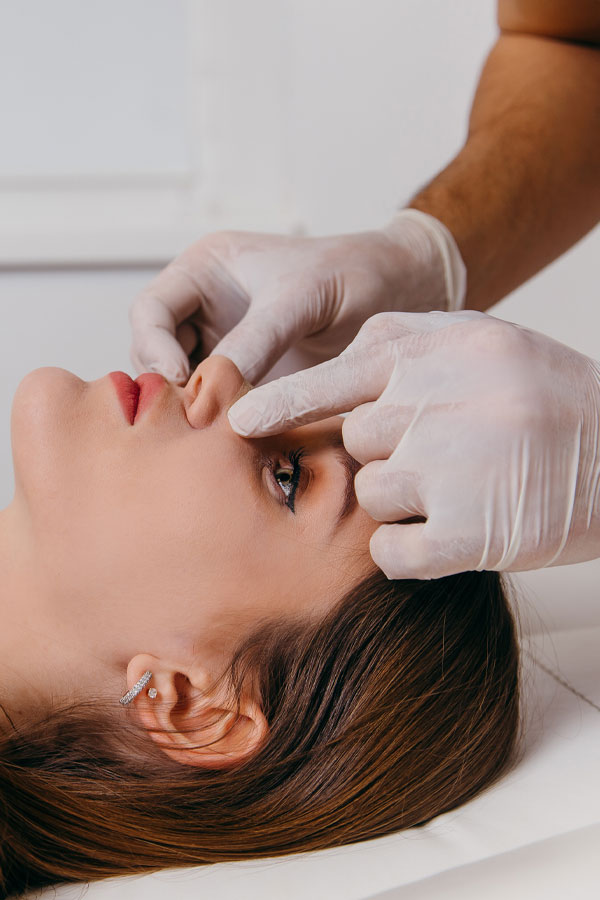
Nasal taping is commonly used in the early weeks after surgery to help manage swelling and support subtle shaping. Patients can continue taping at home for several weeks, as it can assist with gentle contouring and allow them to appreciate small improvements during the early healing phase.
Visible Gains & More Natural Appearance
Recovery Pearls
By the end of the second week, most visible bruising has resolved. Swelling along the bridge and cheeks begins to improve, and the face starts to look more familiar. Many patients feel comfortable being seen socially at this stage, and makeup can usually be resumed if desired. Breathing improves significantly, with a return to nasal airflow, and saline sprays are used regularly for gentle cleansing.
By the end of the first month, approximately 25–50% of the swelling has resolved. The overall shape and structure of the nose are visible, though refinement, particularly of the nasal tip, is still ongoing. The tip will continue to feel firm, reflecting residual swelling. I remind patients that the nasal tip remains the most prone to holding onto swelling and is often the last area to fully refine. Small irregularities along the nasal bones may be palpable as the bone continues to remodel.
My Perspective
This is the phase where patients start to feel like themselves again, and it is one of my favorite parts of the process to witness.
There is a noticeable shift, both physically and emotionally. Patients begin to see the changes they were hoping for. They take photos (usually lots of them!) again. They start to reconnect with their reflection and appearance.
At the same time, this is when attention to detail can become more heightened. I gently remind patients to stay grounded. The major changes are already there, and the final refinement, the last couple of millimeters, evolves as a result of the healing process. Many of these points are a continuation of what we discussed during the consultation and preoperative visits, but I completely understand that it is one thing to hear these concepts ahead of time and another to experience the very real physical moments of recovery as they unfold. My role in this phase is to acknowledge everything patients are seeing and feeling, while helping frame it within the context of a very real and ongoing biological healing process.
This is where patience becomes an essential part of the process.
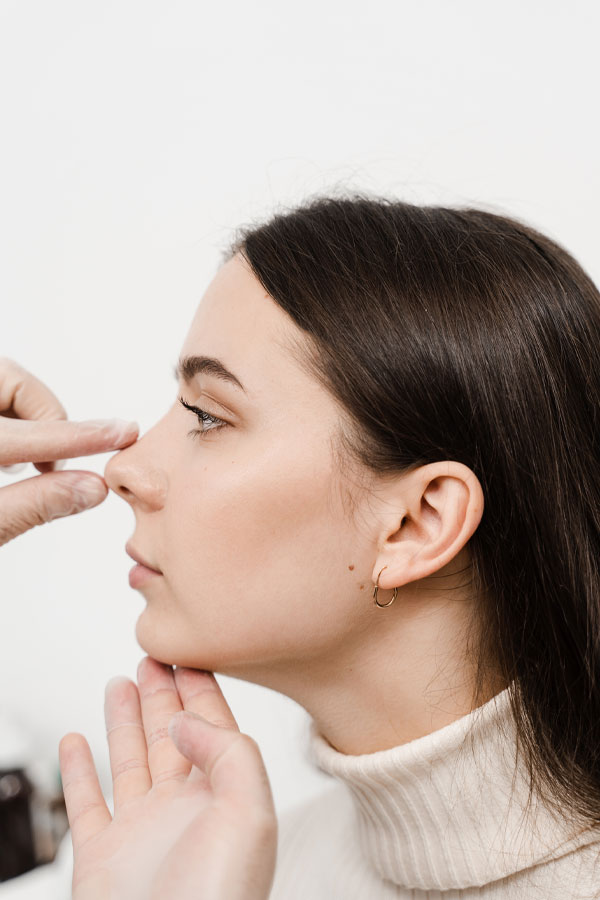
During postoperative visits, the nose is evaluated both internally and externally. These appointments help patients understand the progress already made and provide clear guidance on what to focus on at home, including massage and taping in the early weeks. The nasal tip tends to retain swelling the longest, though gradual improvement is typically seen week by week.
Recovery Feelings Fade
Recovery Pearls
Between one and three months, most patients have returned to their normal routines. Nasal breathing is often significantly improved, especially for those with preoperative airway concerns. Massage typically continues through about six weeks, and in select cases, light nighttime taping may be recommended for up to three months, particularly in patients with thicker skin.
Follow-up visits during this time allow for ongoing assessment of swelling and healing. In select cases, additional interventions such as continued massage, taping, or targeted injections may be recommended to address persistent swelling.
Biologically, healing of the overall appearance remains active. Refinement of the nasal tip continues, and any visible skin incisions, such as along the columella, may still appear slightly pink but will continue to fade over time. When appropriate, minor laser treatments may be used to support scar healing.
My Perspective
By this stage, recovery starts to fade into the background of daily life. Patients are typically no longer thinking about their nose constantly, which is a meaningful shift.
This phase becomes more of a dialogue. My perspective and the patient’s perception do not always perfectly align, and that is normal. Sometimes I see swelling that a patient does not notice, and sometimes patients are more aware of subtle changes than I am.
Rhinoplasty lives in both the objective and subjective worlds. Part of my role is helping patients navigate that balance while continuing to guide the healing process in a thoughtful, individualized way.
Maturation and Final Refinement
Recovery Pearls
Between four months and one year, the nose continues to mature and refine. Changes during this phase are subtle and gradual. The nasal tip softens, residual firmness improves, and sensation of the skin overlying the nose returns to near normal.
Minor day to day variations in swelling can occur, influenced by hydration, hormones, and overall health. These fluctuations are normal and not indicative of regression.
By one year, the majority of meaningful healing has occurred, and the final result is largely established. In some patients with more reactive or thicker skin, additional time may be needed for swelling to fully settle. There is literature to suggest that in select cases, the true endpoint of healing may extend closer to 18 to 24 months.
Interestingly, patients will sometimes appreciate their recovery in ways that photographs do not fully capture.
My Perspective
At this stage, patients usually have a strong sense of their result, but every so often, they notice that the nose looks even better than it did before. A little more refined in certain lighting, a little more natural in photos.
These changes are not dramatic. They are quiet and subtle, but no less important than any other stage of healing. I often remind patients of a simple concept: most of the swelling resolves early, but the final refinement takes time. This slower phase is where the nose truly settles into the face in a way that feels natural and effortless.

One of the most important parts of recovery is emotional adjustment. It takes time to get used to a new appearance, and early swelling can make patients feel uncertain. By about four to six weeks, most begin to feel like themselves again, with growing confidence and comfort in their new nasal shape.
Recovery Pearls
Emotional adjustment is an important and often under-discussed component of rhinoplasty recovery. Because the face cannot be totally concealed, patients are continuously aware of changes throughout the healing process.
Even when physical healing is progressing well, it may take several months, typically three to six, for patients to fully adjust to their new appearance. This adjustment period is influenced by both the physical changes and the psychological experience of seeing a different version of oneself.
Preoperative tools such as computer imaging can help patients visualize potential outcomes and better understand the degree of change, supporting more informed decision-making.
My Perspective
This is the part of recovery that I think deserves more attention.
The face is deeply personal. There is no stepping away from it. Every reflection becomes part of the process of adjustment. Even when the result is objectively beautiful, it still represents change, and change takes time to process. Rhinoplasty often gives someone something they never naturally had. Until surgery, that version of the face exists only in theory.
That is why I value the consultation process so deeply. If I ever feel that a patient is not emotionally ready, or that I cannot realistically achieve what they are envisioning, I will not proceed.
This is not just a procedure. It is a journey: one that requires trust, patience, and alignment between patient and surgeon.
In the end, recovery is not only physical. It is perceptual.
As always – thanks for reading.
xo, Dr. Renata
Medical disclaimer: This blog is intended for educational and informational purposes only and should not be interpreted as medical advice or a guarantee of results. Cosmetic surgery outcomes vary based on individual anatomy, healing response, and other personal factors. For personalized medical guidance, please consult with a qualified and board-certified healthcare provider.
At RENATA Facial Cosmetic Surgery, we prioritize privacy. While many Before & After photos are featured on our website and social media channels, we understand not everyone wishes to share them publicly. To respect our patients’ unique preferences, we invite you to explore a more comprehensive Before & After gallery during your consultation in our office.
Life can be demanding, and we understand. For patients who may be traveling, preparing for a last-minute occasion, or simply looking for a more exclusive experience without any inconvenience or delays, we are pleased to offer preferred patient scheduling. Patients may undergo a personal consultation as well as tailored cosmetic treatments during evening hours or weekends. Appointments are required and premium rates apply. Please call our office to inquire about preferred patient scheduling and allow us to create an exceptional experience just for you.
Contact UsAt RENATA Facial Cosmetic Surgery, patients receive excellent customer service, communication, personal attention, and scheduling flexibility. Located in the historical and breathtaking waterfront neighborhood of DUMBO, Brooklyn in New York City, our office serves local neighborhoods including Brooklyn Heights, Park Slope, Williamsburg, and Cobble Hill, as well as Manhattan and New York City at large.
Our office location is:
58 Prospect Street, Brooklyn, NY 11201
Monday - Friday: 8:30AM to 4:30PM Saturday (by appointment only): 9:30 to 2:30PM