

The term “Ozempic face” has become part of the cultural conversation very quickly, but like many viral phrases, it oversimplifies what is actually happening anatomically.
Patients often come in worried that the medication itself is somehow damaging their face. In reality, what most people are noticing is facial fat loss during significant weight reduction, often occurring more rapidly than expected, and in an area of the body that behaves very differently from the waistline or hips.
I can understand why the term became so widely used. It captures attention quickly, particularly because facial changes tend to feel very personal and emotionally charged. But it also creates the impression that GLP-1 medications are causing some entirely new cosmetic phenomenon, when in many cases the face is simply responding to rapid weight loss the way faces often do.
As facial fat decreases, the overlying skin may not contract perfectly. Areas that once appeared supported can start to look sharper, flatter, hollow, or more tired. Features that felt balanced before may suddenly feel unfamiliar.
I educate my patients that GLP-1 medications do not create a new category of face. They accelerate weight loss. Weight loss reduces fat volume throughout the body and face. And unlike the body, the face does not always aesthetically reward that change in the way patients anticipated (or not).
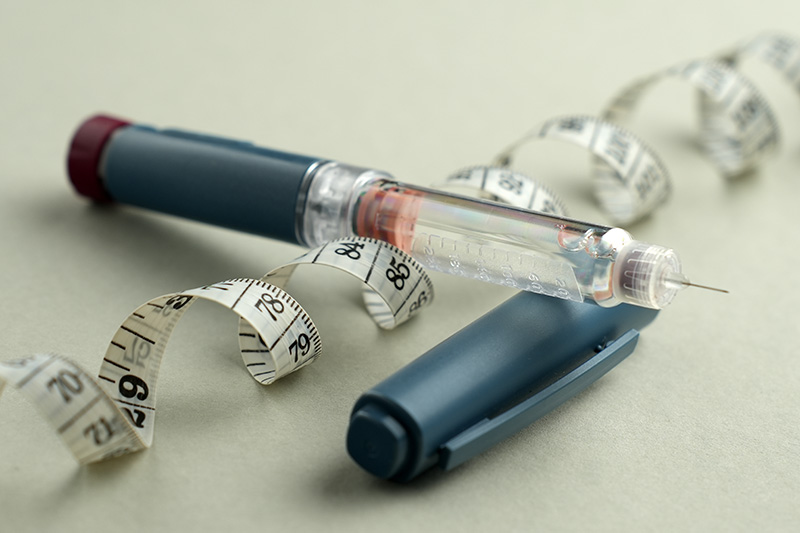
Facial changes associated with rapid weight loss are often more complex and individualized than terms like “Ozempic face” suggest. GLP-1 medications may accelerate fat loss throughout the body, including the face, where changes in volume and skin support can feel particularly noticeable for some patients.
Most patients do self-diagnose with the words, “I have midface volume loss.” They say they look tired…hollow…sunken…older. Sometimes they say they look different to the point of being unrecognizable. Language matters!
Often the under-eye area is where patients notice the change first. As cheek volume decreases, the transition between the lower eyelid and cheek becomes more apparent, which can create increased shadowing or a more fatigued appearance. In other patients, the lower face becomes the focus. Folds around the mouth appear deeper, jowls appear more pronounced, or the neck less defined due to the descent of skin from above.
What makes this complex is that patients are often simultaneously happy with their weight loss. They may feel healthier, more fit, and more confident physically, while also feeling unsettled by the facial changes they see in the mirror. That simultaneous and somewhat contradictory experience can feel emotionally complicated for patients. You can be thrilled with the medical and physical benefits of weight loss and still feel uncomfortable with how your face has changed.
I truly believe patients deserve a thoughtful conversation about these changes, one that moves beyond dramatic terminology and focuses instead on anatomy, aging, and realistic solutions.
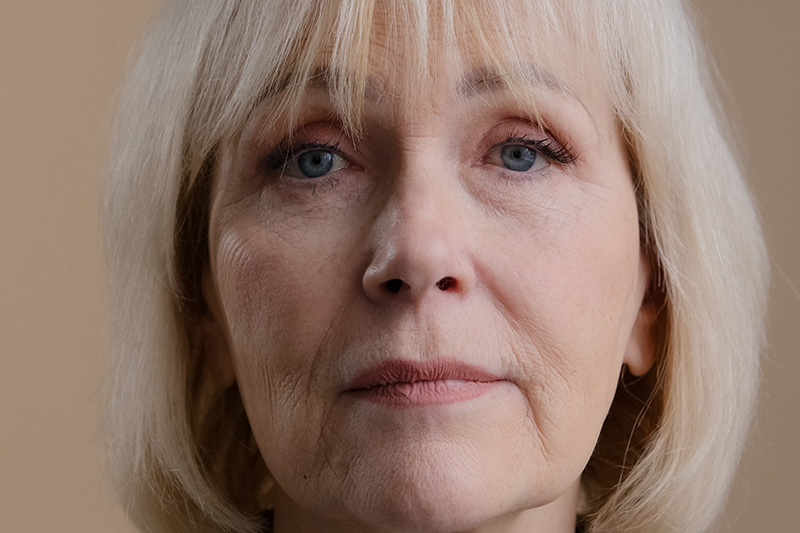
Facial volume loss can alter the way light, shadow, and structural support interact across the face. In some individuals, this may create a more hollow, tired, or prematurely aged appearance despite otherwise successful and healthy weight loss. Image used for illustrative and educational purposes only.
If a patient loses a meaningful amount of body fat, some of that reduction will occur in the face as well. What makes facial aging more complicated is that the face contains multiple distinct fat compartments, each contributing differently to shape, proportion, and perceived youthfulness.
Not all facial fullness is viewed the same way aesthetically. We generally appreciate volume in the cheeks and midface because it supports the eyes and creates softer transitions across the face. At the same time, patients may dislike volume aka fullness in the lower cheeks, jawline, or jowl region. Facial fat is not uniformly “good” or “bad.” Its location matters tremendously for our aesthetic goals.
As these fat compartments decrease in size, underlying structural changes can become more visible. Skin that previously appeared smooth and supported may show pre-existing laxity once some of the internal volume or “padding” is gone.
This is especially noticeable in patients in their late 30s, 40s, 50s, and beyond, because the skin naturally loses elasticity with age. Genetics play a role, but environmental factors matter significantly as well, particularly chronic ultraviolet exposure and nicotine use, both of which accelerate the loss of elastin within the skin.
Patients often hear about collagen, but elastin plays a distinct and often underappreciated role. Elastin is what allows skin to recoil and “snap back” after stretching. When elastin quality declines over time, the skin becomes less capable of adapting smoothly to rapid changes (or specifically, decreases) in facial volume. The speed of weight loss can make this feel especially abrupt. A face that changed gradually over ten years may feel emotionally manageable. A face that changes noticeably over several months often does not.
Baseline anatomy also matters tremendously. A patient who naturally has a lean face may look dramatically different after even modest weight loss because there was relatively little facial volume reserve to begin with. Meanwhile, a patient with thicker skin or fuller facial soft tissues may tolerate weight loss quite gracefully and even prefer the resulting definition.
This is why two patients on the same medication can have completely different aesthetic experiences.
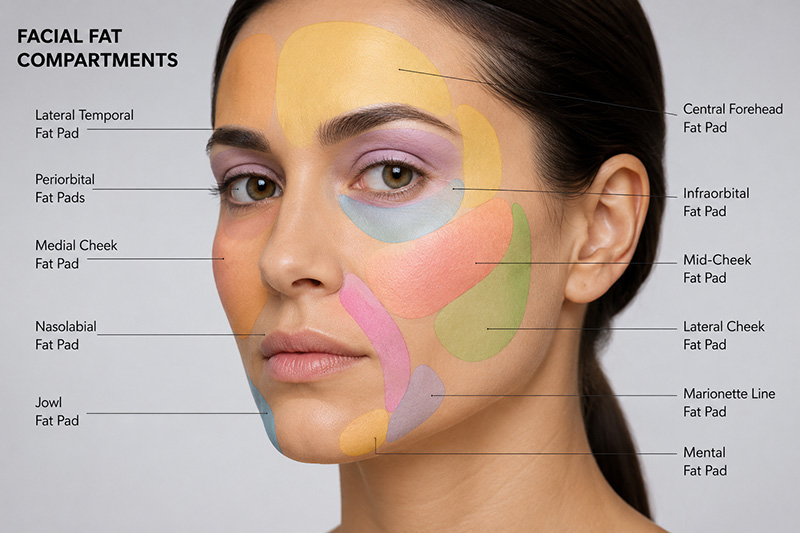
AI-generated educational illustration demonstrating various facial fat compartments and the anatomical regions where volume loss may occur with chronological aging or significant weight loss. Facial fat is organized into distinct superficial and deep compartments that may age, descend, or lose volume differently over time. These compartments exist within a complex structural framework of retaining ligaments, fascia, and muscular anatomy. Terminology and naming conventions for facial fat compartments may vary somewhat between anatomical sources, publications, and surgical literature.
Patients often describe all facial aging after weight loss as “volume loss,” but deflation and laxity are not interchangeable problems. As we see in younger patients, a face can lose significant volume while still maintaining relatively good tissue support. In those cases, carefully restoring selective volume may create meaningful improvement.
But in patients who have already experienced some degree of collagen and elastin loss, the issue is often not simply that volume is missing. It is that the tissues no longer sit where they once did. As facial fullness decreases, we begin to uncover two aging processes at the same time: volume loss and gravitational descent, the latter often becoming much more noticeable once underlying support fades.
As support weakens and facial fat decreases, the lower face and neck may begin to descend more visibly. The jawline becomes less structured. The neck becomes heavier and less defined from profile view. The folds around the mouth deepen, not purely because volume disappeared, but because the tissue has changed position and fallen somewhat.
That distinction matters because treatment decisions become very different depending on the actual diagnosis. This is where I think social media conversations can become misleading. Patients are often encouraged to think every post-weight-loss facial change is a volume problem, to be fixed with filler or fat. However, these have very clear limitations. Volumizing addresses volume loss, but it does not reposition descended tissues. It does not meaningfully tighten significant skin laxity. And when too much fat or filler is used to compensate for structural aging changes, patients often start to look puffy, heavy, or vaguely overfilled rather than refreshed.

A photo example of a young woman with high skin elasticity and collagen support demonstrating a firm, well-supported jawline and neck without significant skin laxity. In patients with this type of skin quality and anatomy, facial and neck tissues may respond more favorably to weight loss with better skin recoil and adaptation over time. Stock image used for illustrative and educational purposes only.
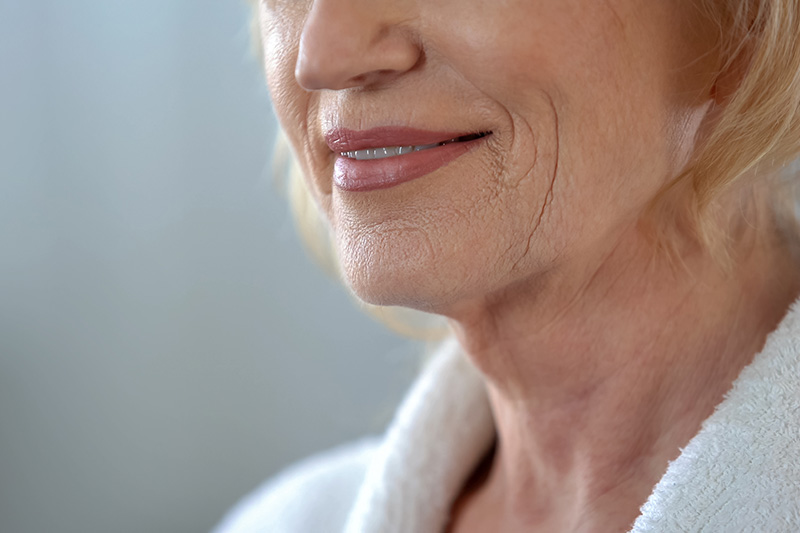
This image demonstrates a more mature face and neck anatomy with skin thinning, descent, deeper folds around the mouth, and visible neck laxity. Changes similar to these, at varying degrees of severity, may become more noticeable with rapid facial weight loss, particularly in patients with more mature skin quality, reduced elasticity, and pre-existing age-related structural changes. Facial aging is multifactorial, and weight loss may accentuate anatomical changes that were already gradually developing over time.
Timing matters, and it is one of the least discussed parts of this conversation. When a patient is still actively losing weight, the face is still changing. That means treatment decisions made too early may not reflect the patient’s eventual baseline several months later.
In many cases, it is reasonable to conservatively restore some volume during the weight loss process, as long as patients understand that the face is still in transition and will likely need reassessment over time. Once weight stabilizes, it becomes much easier to determine whether that conservative correction was enough, or whether another solution makes more sense.
This does not mean patients should avoid consultations during their weight loss journey. In fact, these conversations are often helpful and reassuring. But more definitive treatment decisions are usually smarter once the trajectory of weight loss becomes clearer. Otherwise, patients may find themselves continuously chasing a moving target.
My perspective is that the term “Ozempic face” is an oversimplified catch-all phrase for something that is actually far more anatomical and highly individualized from patient to patient. It is not always inherently negative. And, the way these changes present can vary dramatically in their appearance and severity. Rapid weight loss can uncover how much the face depends on volume, skin elasticity, skeletal support, and soft tissue positioning. When those relationships change quickly, the face can suddenly feel unfamiliar.

There is beauty in every individual set of features, anatomy, strengths, and imperfections. The vision is shaped through self-reflection, thoughtful dialogue, and trust between patient and board-certified surgeon. This is not my patient, and the image is used for illustrative purposes only.
That does not mean every patient needs filler, treatment, or surgery. And it certainly does not mean the goal is to restore every ounce of previous facial fullness. Perhaps the real goal is age-appropriate balance, defined uniquely at the time of each consultation. As a surgeon, being able to see the world through my patient’s eyes is an important part of understanding what the next best step is. This includes recognizing when waiting, a touch of reassurance, and even leaving certain things untouched may ultimately create the most authentic and fulfilling outcome possible.
As always – thanks for reading.
xo, Dr. Renata
Medical disclaimer: This blog is intended for educational and informational purposes only and should not be interpreted as medical advice or a guarantee of results. Cosmetic surgery outcomes vary based on individual anatomy, healing response, and other personal factors. For personalized medical guidance, please consult with a qualified and board-certified healthcare provider.
At RENATA Facial Cosmetic Surgery, we prioritize privacy. While many Before & After photos are featured on our website and social media channels, we understand not everyone wishes to share them publicly. To respect our patients’ unique preferences, we invite you to explore a more comprehensive Before & After gallery during your consultation in our office.
Life can be demanding, and we understand. For patients who may be traveling, preparing for a last-minute occasion, or simply looking for a more exclusive experience without any inconvenience or delays, we are pleased to offer preferred patient scheduling. Patients may undergo a personal consultation as well as tailored cosmetic treatments during evening hours or weekends. Appointments are required and premium rates apply. Please call our office to inquire about preferred patient scheduling and allow us to create an exceptional experience just for you.
Contact UsAt RENATA Facial Cosmetic Surgery, patients receive excellent customer service, communication, personal attention, and scheduling flexibility. Located in the historical and breathtaking waterfront neighborhood of DUMBO, Brooklyn in New York City, our office serves local neighborhoods including Brooklyn Heights, Park Slope, Williamsburg, and Cobble Hill, as well as Manhattan and New York City at large.
Our office location is:
58 Prospect Street, Brooklyn, NY 11201
Monday - Friday: 8:30AM to 4:30PM
Saturday (by appointment only): 9:30AM to 2:30PM